| ||||
 | ||||

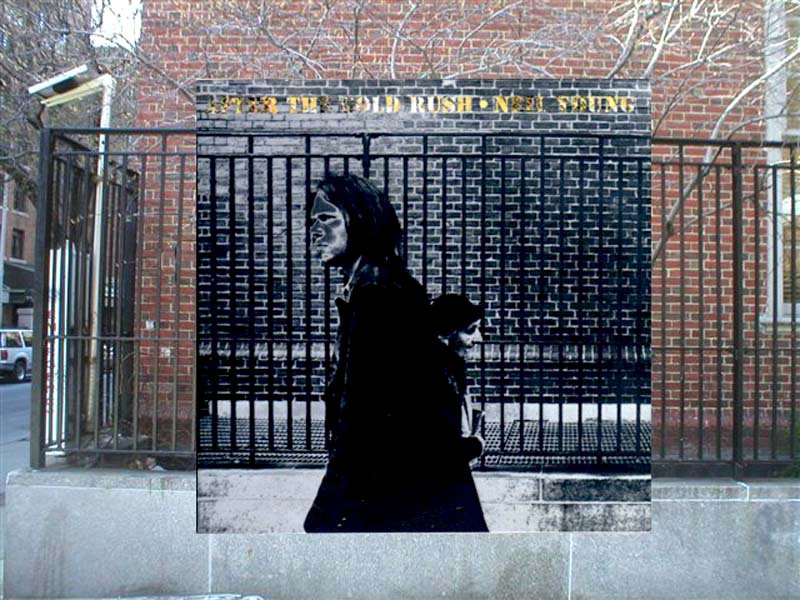
example: Neil Young's 
• POP CULTURE - NEW YORK: THE ULTIMATE LOCATION FINDER, based on PopSpots, has maps to over 2,000 Pop Culture locations you can visit in New York CIty. RELEASED IN 2018! Ask for it it at your at your local bookstore, or buy it online from Amazon, Barnes and Noble, Target, Walmart and other online dealers. Read about it here. To be notified of new PopSpots and "PopSpot Singles" entries, follow PopSpotsNYC on Twitter:
Follow PopSpots on Facebook 
For questions or comments, you can email me, Bob Egan, here. Reference section: 
click here to see ongoing Dylan Research and also selected art, film, and history PopSpots-in-progress. PopSpots in the media. 
Looking for a free and extremely simple online method to learn HOW TO PLAY GUITAR? 
Or, just looking for a list of over 250 easy-to-play 3-chord and 4-chord songs? Click here to get to the website for: Bob Egan's MOST EXCELLENT LIST OF 3-CHORD and 4-CHORD SONGS" For The PopSpots Guide to Bookstores in NYC, click here.
|
CEDAR TAVERN - 24 UNIVERSITY PLACE - GREENWICH VILLAGE - NEW YORK CITY The Cedar Tavern (or Cedar Street Tavern) was a bar and restaurant at the eastern edge of Greenwich Village, New York City. In its heyday, it was known as a gathering place for avant garde writers and artists. It was located at 24 University Place, between 8th and 9th Streets. It was famous in its heyday in the 1950's and early 1960's as a hangout of many prominent Abstract Expressionist painters and Beat writers and poets. It closed in April 1963 and reopened three blocks north in 1964, at 82 University Place, between 11th and 12th Streets and eventully closed in November 2006. More detailed information follows below. The Cedar Tavern 
The Cedar Tavern - from "Wikipedia": 1860s-1950s The Cedar Tavern was opened in 1866 on Cedar Street, near present-day Zuccotti Park according to various books.*. . . . In 1933 it moved north to 55 West Eighth Street. . . . In 1945 it moved east to 24 University Place. . . . In 1955, the Cedar Tavern was purchased by Sam Diliberto, a butcher, and his brother in law, John Bodnar, a window washer, from Joe Provenzano. *(I looked at various sources to find an address of the "Cedar Tavern" or the "Cedar Street Tavern" on Cedar Street before 1933 but could not find one. The bar may have had a different name back then.) 1950s Robert Motherwell had a studio nearby in the early 1950s, and he held a weekly salon for artists there. The Cedar was the closest place for them to have a drink afterwards. Partrons liked it for its cheap drinks and lack of tourists or middle-class squares. University Place in those days was downmarket because of the several welfare and single-room occupancy hotels in the area. Jackson Pollock, Willem de Kooning, Mark Rothko, Franz Kline, Michael Goldberg, Landes Lewitin, Aristodimos Kaldis, Lynne Drexler, Phillip Guston, Knute Stiles, Ted Joans, James Brooks, Charles Cajori, Mercedes Matter, Howard Kanovitz, Al Leslie, Stanley Twardowicz, Morton Feldman, John Cage, and others of the New York School of painters, poets, musicians, and dancers all patronized the bar in the 1950s when many lived in or near Greenwich Village. Historians consider it an important incubator of the Abstract Expressionist movement. It was also popular with writers Allen Ginsberg, Jack Kerouac, Gregory Corso, Frank O'Hara, George Plimpton, Jean Stein, Harold "Doc" Humes, Alex Trocchi, and LeRoi Jones. Pollock was eventually banned from the establishment for tearing the bathroom door off its hinges and hurling it across the room at Franz Kline, as was Jack Kerouac, who allegedly urinated in an ashtray. 1960sSam and John looked to the East Village around St. Mark's Pl. to reopen after the building was sold and demolished in 1963. After a year they bought the building at 82 University Place, which had been occupied by an antique store, and built the new bar in a more upscale pub style. By this time Pollock and Kline were gone, de Kooning had moved to East Hampton, and the scene gradually dissipated. In the 1960s, Tuli Kupferberg of The Fugs, David Amram, and occasionally Bob Dylan, were known to patronize the Cedar Tavern. D.A. Pennebaker, Dylan, and Bob Neuwirth met there to plan the shooting of their 1967 documentary, Dont Look Back. 1959 
Crowd waiting to get in. October 2, 1959 
Exterior - daytime. 
(photo by Walter SIlver) Cedar Tavern - The bar. John Bodnar, co-owner of the bar (facing us), and his assistant. (For some reason the clock's face had been edited out.)(Getty) 
The seats in the back under the clock. (Closing night, March 30, 1963) 
The bar and front windows as seen from the back under the clock. (Closing night, March 30, 1963) 
The opposite of the tavern from the bar on April 14, 1956. 
A crowded booth. 
Painter Mark Rothko in glasses. March 9, 1959. 
Musician David Amran in checkered suit on June 6, 1959. 
A group of painters and writers in 1959. From let to right:Charlotte Brooks, Jack Tworkov, Mercedes Matter, and James Brooks, (Unknown at right) 
(photo by John Cohen) Closing night patrons on March 30, 1963. 
Another photo taken on closing night - March 30, 1963. Writer Frank O'Hara is in the center looking over at the man with glasses. 
Poet Leroi Jones is at left. 
This is the side of the street street where the Cedar Bar was located. The west side of University Place between East 8th Street and East 9th Street. 
Here's the Cedar Bar when it was at 24 Universiry Place superimposed on that street today. 
The 4-story white building in the center was 22 University Place. It was the building next door to the Cedar Tavern. 
The Cedar Tavern was located on the far left side of this 6-story loft building on University Place. It is blocked by an awning that reads "Lafayette." 
I joined two city photos together to make up the whole block, then put a red box around where the Cedar Tavern used to be at 24 University Place. (click to ENLARGE) 
Here's where the Cedar Tavern was on a 1955 Bromley map. 
In 1963 the building the Cedar Tavern was located in at 24 University Place closed to be replaced by a large residentlal condominium building. The Tavern closed in April of 1963 and moved three blocks north to 82 University Place between 11th and 12th on the west side of the street. The owners bought the entire building from an antique store. That Cedar Tavern stayed open at that location for 43 years until 2006, when it closed for good. The building has been replaced by a 7-story building. That 5o foot mahogany bar that the tavern had for over 100 years now resides in a bar in Texas. You should just be able to make out the name "Cedar Tavern" in this photo, between that awnings that say "roof garden' and "tavern." 
The building with the European Wax Center replaced the building at the 82 University Place location. 
A matchbook from the 82 University Place location. 
Before it moved to 24 University Place in 1945, the Cedar Bar was located at 55 West 8th Street between 5th Ave and 6th Ave from 1933-1945. This photo was taken between 1939 and 1941. 
Here's a wider version in a similar shot. 
Here's another shot of the 8th Street location. it's also from between 1939 and 1941.. 
Here's what that building looks like now. 
|
|||