| ||||
 | ||||

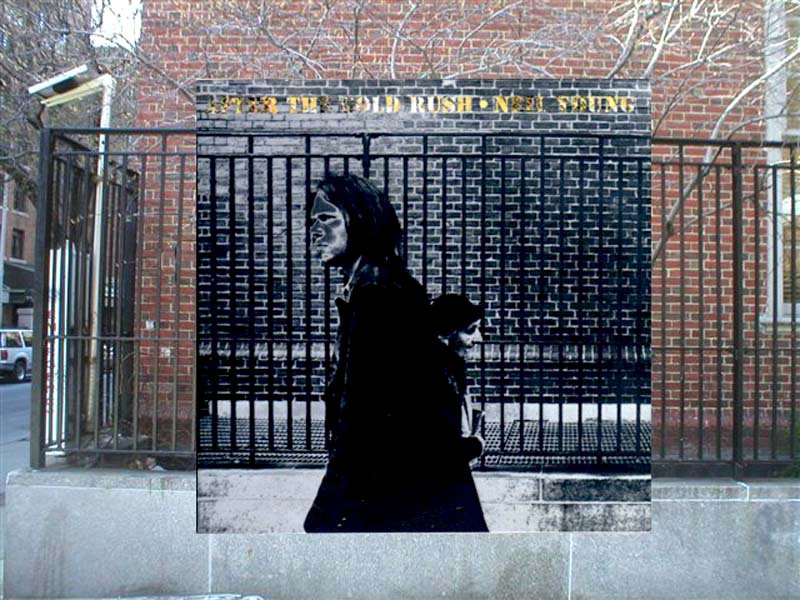
example: Neil Young's 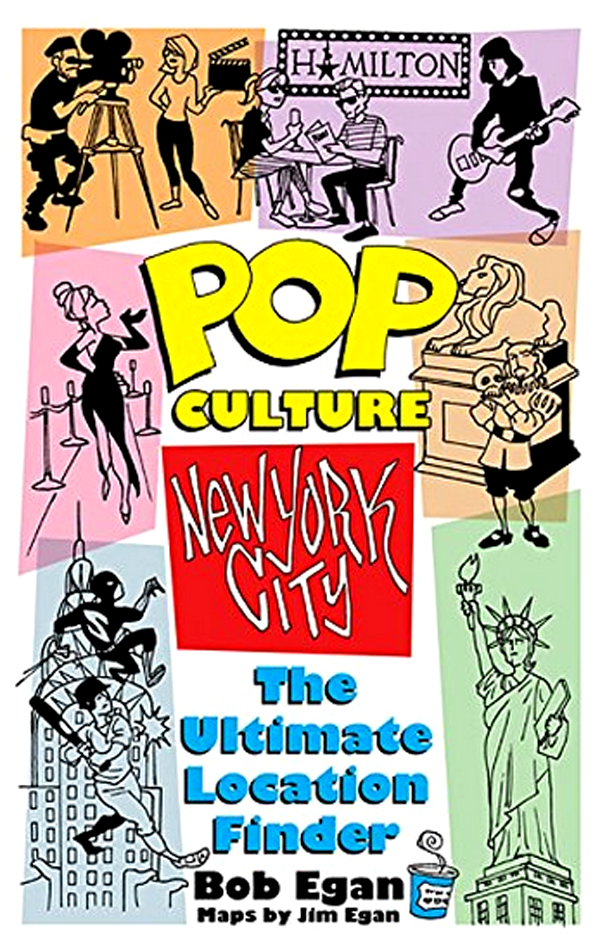
• POP CULTURE - NEW YORK: THE ULTIMATE LOCATION FINDER, based on PopSpots, has maps to over 2,000 Pop Culture locations you can visit in New York CIty. RELEASED IN 2018! Ask for it it at your at your local bookstore, or buy it online from Amazon, Barnes and Noble, Target, Walmart and other online dealers. Read about it here. To be notified of new PopSpots and "PopSpot Singles" entries, follow PopSpotsNYC on Twitter:
Follow PopSpots on Facebook 
For questions or comments, you can email me, Bob Egan, here. Reference section: 
click here to see ongoing Dylan Research and also selected art, film, and history PopSpots-in-progress. PopSpots in the media. 
Looking for a free and extremely simple online method to learn HOW TO PLAY GUITAR? 
Or, just looking for a list of over 250 easy-to-play 3-chord and 4-chord songs? Click here to get to the website for: Bob Egan's MOST EXCELLENT LIST OF 3-CHORD and 4-CHORD SONGS" For The PopSpots Guide to Bookstores in NYC, click here.
|
Club 47 in Cambridge, Massachusetts, was one of the most influential American folk clubs of the late 1950's and early 1960s, helping launch the careers of Joan Baez and other major folk artists while making Harvard Square a center of the folk revival. It went by various names over the years: This is the only photo that has surfaced publicly in the last 66 years that shows any of the front facade of the legendary Club Mount Auburn 47 (later the "Club 47") folk music coffee house/club in Cambridge, Mass. The picture is a reflection from a Harvard University building across the street. (then reversed so it reads correctly). The picture come from a Harvard Univerity 1960 yearbook. The Club Mount Auburn 47 began in 1958 as as a coffee shop with jazz, then quickly became the premier folk music club in Cambridge. The club incubated the careers of many folk musicans including Joan Baez, Jim Kweskin, Tom Rush, Jackie Washington, Taj Mahal, Maria and Geoff Muldar, and the Charles River Valley Boys among dozens of others. Bob Dylan played here occasionally beginning in 1961, visiting from Greenwich VIllage, often sitting in with his friends as they were performing. The club moved in 1963 to a more central part of Harvard Square and changed it's name to Passim (from the Latin for "here and there"). It's still active today. 
After much searching, I ran across this photo in a 1960 Harvard College yearbook at the library of the Harvard Club of New York CIty. The image was reversed. I have reversed it in Photoshop. You can see the letters on the awning that read UB M UBUR 47, which become CLUB MOUNT AUBURN 47. The location is 47 Mount Auburn Street. A food store is in the space now. A blue plaque on the outer wall (which I'll show you later) indicates it was where the Club 47, as it was mostly referred to, was located.
Here's a photo that more isolates the club. 
There is one drawing of the club that has been around for many years. It is from the landmark history book of the Cambridge folk scene: Baby, Let Me Follow You Down: The Illustrated Story of the Cambridge Folk Years by Eric Von Schmidt and Jim Rooney (Anchor Books, Garden City NY, 1979, out-of-print) (Dylan fans may remember Von Schmidt from Dylan's introduction to "Baby Let Me Follow you Down" on his (Dylan's( album (1962). He said: "I first heard this from Rick Von Schmidt. He lives in Cambridge. RickÕs a blues guitar player. I met him one day in the . . . green pastures . . . of Harvard University.") 
The Club 47 moved in 1963. In 1971, the owner of the four contiguous stores that included the club, covered up the brickwork above the stores with four large 70's style signs. This picture is from 1973. Club 47 was in the location where Cahalys' (sundries) is in this picture. 
This shows the back of the four stores. They still have the horizonal row of bricks along the top. 
I told you all about the brickwork and signs to lead you to this: an approximate recreation of the front of the club in 1960. Until someone sends me a real photo, it's the best we can do to show you what it looked like. For the re-creation, I used the awning and letters from the Harvard yearbook photo, then took off the 1970's store signs and added the identical horizontal brickwork from the back top of the building. It took about 15 different AI prompts. 
Here's a colorized version. 
This blue historical plaque was placed to the right of the door at 47 Mt. Auburn Street in January of 2008 by The Cambridge Historical Commission as part of the club's 50th-anniversary celebration. 
(via Flickr) Here's an overhead shot of the four stores. According to the 1961 Cambridge phone directory, the stores were from left to right: Tommy's Lunch (49) , Cahaly's (47a), The Club Mount Auburn 47 (47), and Cambridge Guidance Center (45+1/2). The white building at the right of the block was called The Speakers' Club (45). Since the 1970's the City has renumbered some of the stores. For the record, the building at the bottom left is the dining hall of Qunicy House, a Harvard residential building, and the buildings above the four stores are part of Adams House, also a Harvard residence for undergraduates. 
There is a award-winning documentary about the history of the Club 47 and the Cambridgfe folk scene called "For the Love of the Music: The Club 47 Folk Revival," that came out in 2012. It was directed by Todd Kwait and Rob Stegman, narrated by Peter Coyote, and runs about 1 hour 46 minutes. When they first mention the club, they show this picture of Mount Auburn Street. To the left is the mock-Flemish Harvard Lampoon building. Then, in the center of the picture, you can see a Coka-Cola sign. That was hanging over the store next to the Club 47.
Club 47 began on January 6, 1958, when two recent Brandeis University graduates, Paula Kelly and Joyce Kalina (later Joyce Chopra) , (below, left to right) opened a small coffeehouse at 47 Mount Auburn Street in Cambridge, Massachusetts, a few blocks from Harvard Square. The two women had traveled in Europe and liked the atmosphere of European coffeehouses, and they wanted to create something similar in Cambridge. Originally called Mount Auburn 47, the club was not conceived as a folk club at all. It opened primarily as a jazz coffeehouse, with pianist Steve Kuhn's trio performing on weekends and on other night classical guitarist Rudi Vannelli playing on other nights 
Joyce and Paula work the coffee counter at the club in 1961. 
(from a 1961 Harvard yearbook) After the club became a non-profit, Betsy Siggins (below), who had dropped out of B.U., and her husband Bob, a member of the Charles River Valley Boys, and both, members of the Cambridge folk community, became board members. At that point Betsy began working full time at the club, partly as a waitress and partly running the club's art gallery. She soon became the schedule arranger, while Jim Rooney and Byron Lord Linardos booked the talent. (For a full history of the club see the bottom of the webpage) 
Betsy Siggins with Bob Dylan, who occasionally joined in with other musicians at the club, at Jordan Hall (of the New England Conservatory of Music) , November 2, 1963. Dylan would often stay with Bob and Betsy Siggins when he was in Cambridge. 
Bob and Betsy confer at the Jordan Hall concert. 
(photo by Dick Waterman) Dylan warming up backstage at Jordan Hall. 
(photo from Getty Images) Dylan reading the October 1963 issue of Broadside backstage at Jordan Hall. 
The October 1963 issue of Broadside featuring Bob on the cover. 
(photo by Dick Waterman) Bob Siggins (far right) with the other Charles River Valley Boys along the Charles River in Cambridge. (from left to right: John Byrne Cooke, Joe Val, Everett Alan Lilly, Bob Siggins) 
Bob Siggins (in helmet) with Bob Dylan at the 1964 Newport Folk Festival. 
Joan Baez onstage playing at the original Club 47 on Mount Auburn Street. Joan often played while barefoot. Here she's in shoes. 
This is the back door of the club that you can see in the Joan Baez photo above. 
Jackie Washington onstage at the Club 47 on Mount Auburn Street with another performer playing washtub bass behind him. 
(photo by John Byrne Cooke) Ramblin' Jack Elliot performs in July of 1963. 
Tom Rush entertains at the club in July of 1963. Tom played at the club during his undergraduate years at Harvard, during which he also had a folk/blues radio show called "Balladeers" at the college radio statioon, WHRB. For three years he lived at Leverett House - just one long block away from the Club - near the Charles River. For at least one year, his roommte was Joe Boyd who wrote about music for the Harvard Crimson and later became a famous music producer (Pink Floyd, Nick Drake). He also managed the soundboard at the Newport Folk Festival in 1965 the night that Bob Dylan famously "went electric." 
If you want to see a literal scrapbook full of photos of performers performing at the original Club 47 on Mount Auburn Street, click to this site of photographs by Jacob Wolfson. The site is Willmaston.com. It is run by Will Marston, the West Coast Archivist of Folk New England. The dropdown menu is under West Coast Folk Archives. The drop downs include pages on: Club 47, Club 47 Photographs by Jacob Wolfson, Eric Von Schmidt, Betsy Siggins and many others. There are interviews and photographs. The original photos of the performers onstage at Club Mount Auburn 47 include : A poster from the club from 1959. (blown up from a small original) 
A sample monthly calendar from March 1963, several months before they moved in Septermbe 1963 to 47 Palmer Street. (Click on it to enlarge the calendar) 
In September of 1963 the Club 47 moved to a basement space on Palmer Street, closer to the central part of Harvard Square. Since there were no numbers on Palmer Street, they petitioned the city to be able to name their space 47 Palmer Street so they could still refer to the coffeehouse as Club 47. The city said ok. 
Club Passim is located in the basement of 47 Palmer Street. "Passim" is Greek for "here and there." 
Singer-songwriter Mitch Greenhill's first album - Pickin' the CIty Blues (1963, Prestige) was photographed on the front steps of Passim. 
Looking down Palmer Street from the other direction. Club Passim is at left. 
The Club Passim interior. 
Buffy Saint Marie playing in October of 1964. 
Bob Dylan with Joan Baez next to him performs in 1964. 
That image became the basis of Eric Von Schmidt's cover illustration of the book Positively Fourth Street: the Lives and Times of Joan Baez, Bob Dylan, Mimi Baez Farina and Richard Farina by David Hajdu (FS&G, 2001). 
Club Passim was one of the first venues in the north of the U.S. to promote blues musicians from the south like Mississippi John Hurt and Reverend Gary Davis. Peter Wolf, lead singer of the J. Geils Band, lived near the Club Passim and often entertained the blues singers who were playing at the club like Muddy Waters and James Cotton at his apartment. His early band, The Hallucinations, also played at Passim. You can learn about Peter's time at the Club 47 in his book Waiting on the Moon: Artists, Poets, Drifters, Grifters, and Godesses which came out in 2025, or on a You Tube video tour he gives of his haunts on Harvard Square called "Take a trip to Harvard Square and down Memory Lane." 
One of the early albums by the Club 47 crowd was this album: FOLKSINGERS 'ROUND THE SQUARE with songs sung by Joan Baez, BIll Woods, and Ted Alevizos. The album came out in 1960. 
Here's the back of the album. (click to enlarge for easier reading) 
The liner notes menmtion Joan's appearences at Club 47. 
The cover photo was taken at the subway booth in the middle of Harvard Square. As in the photo, Joan often went onstage barefoot. 
(photo by Rick Stafford) Here's a PopSpot of that. 
Here's a wider shot of Harvard Square from 1970. 
When, in the introduction to his song "Baby, Let Me Follow You Down" on his first abum, Dylan sang: "I first heard this from Rick Von Schmidt. He lives in Cambridge. Rick's a blues guitar player. I met him one day in the . . . green pastures . . . of Harvard University," he was probably referring to this: Harvard Yard the center of campus, where the freshmen live. 
(photo from Wikipedia) Before we end, I wanted to again bring up the photo from the Harvard 1960 yearbook that showed many of the letters of CLUB MOUNT AUBURN 47. (click to enlarge) To the left you can see the sign for TOMMYS lunch and the word ARCADE which was probably inside Tommy's Lunch. Between Tommy's and the Club 47 shoud have been CAHALEY'S (which we can't see) - a sundries shop, according to phone books. 
This is the whole picture of the reflection in the Quincy House windows (flipped), for researchers. The reason I was looking through old Harvard yearbooks, was that, when I was doing a PopSpot on a coffee shop near the University of Minnesota campus where Dylan played, called the Ten O'Clock Scholar, I found one of the best interior pictures of the club inside a University of Minnesota yearbook. Sometimes you get lucky twice! 
A Short History of Club 47 (via AI + editing) Club 47: The Little Cambridge Coffeehouse That Became a Center of the Folk Revival The beginnings in 1958: Club Mount Auburn 47 Club 47 began on January 6, 1958, when two recent Brandeis University graduates, Joyce Kalina (later Joyce Chopra) and Paula Kelley, opened a small coffeehouse at 47 Mount Auburn Street in Cambridge, Massachusetts, a few blocks from Harvard Square. The two women had traveled in Europe and liked the atmosphere of European coffeehouses, and they wanted to create something similar in Cambridge. Originally called Mount Auburn 47, the club was not conceived as a folk club at all. It opened primarily as a jazz coffeehouse, with pianist Steve Kuhn's trio performing on weekends and on other night classical guitarist Rudi Vannelli playing on other nights The little storefront held only about 80 people. Almost immediately it ran into problems with Cambridge authorities over regulations governing live entertainment in establishments serving food. The club eventually obtained a nonprofit educational charter and operated as a private membership club. ($1.00 admission at the door made you a member of the club) There is a frequently repeated story that Cambridge law prohibited restaurants from having more than three stringed instruments, but contemporary evidence is much clearer that the actual dispute involved cabaret or entertainment licensing. The exact "three stringed instruments" rule remains difficult to document. Folk Music arrives What transformed Club 47 was the arrival of folk music. One of the young performers who began appearing there was Joan Baez, then a teenager living in the Boston area (and a former freshman college roommate at Boston University of Betsy Siggins who would play a large part with the club). Her appearances attracted increasingly large audiences, and the club gradually changed from a jazz coffeehouse into one of the most important centers of the developing folk revival. Eric von Schmidt, Tom Rush, Jackie Washington, the Charles River Valley Boys and Jim Kweskin and his Jug Band became associated with the club. Bob Dylan appeared there as a guest and sat in with other performers, although he was never one of Club 47's regularly billed headliners before becoming famous. The early Siggins' years Betsy Siggins had become deeply involved with the club. By the early 1960s, as Joyce Kalina and Paula Kelley became less involved, Club 47 evolved into a nonprofit organization governed by a board of directors. Betsy Siggins became increasingly involved in its operation, eventually serving as one of its principal organizers and managers. Her husband Bob Siggins, banjo player with the Charles River Valley Boys, was an important member of the musical community surrounding the club. Betsy joined the club's board and gradually took on whatever work was necessary - helping in the kitchen, booking musicians, organizing performances and eventually serving as the club's manager. She later remembered that Club 47 operated on very little money and with an extraordinarily informal structure. The club moves to Palmer Street The Mount Auburn Street location eventually became too small, and relations with the landlord were difficult. In the fall of 1963, Club 47 moved across Harvard Square to a basement space on Palmer Street, behind the Harvard Coop. Cambridge officials even agreed to give the new premises the address 47 Palmer Street, although that was not its natural street number, so that the club could retain the number that had become part of its identity. A contemporary Harvard Crimson article dated October 30, 1963 reported that the move had already taken place and that the larger quarters would allow the club to expand its activities. The club introduces many veteren blues and bluegrass legends to a new audience The Palmer Street years were probably Club 47's most remarkable period. In addition to the young Cambridge and Boston musicians, the club brought important traditional American performers to Harvard Square. Mississippi John Hurt, Son House, Reverend Gary Davis, Muddy Waters, The Staples SIngers, Bill Monroe, Doc Watson and other blues, bluegrass and traditional musicians appeared there. Club 47 became unusual because young musicians who were rediscovering traditional American music could sit only a few feet from the people who had originally created it. Later stars including Joni Mitchell, Taj Mahal, Gordon Lightfoot, Richie Havens and Tim Buckley also passed through the club. But by the later 1960s the folk revival was changing. Rock music had become dominant, many of the musicians who had formed the original Cambridge scene had moved on, and Club 47 continually struggled financially. Betsy Siggins later summarized the problem very simply: "We ran out of money." The club closes, then reopens as Passim Club 47 closed on April 28, 1968, almost exactly ten years after it opened. For a short time the Palmer Street space was used as an office for Senator Eugene McCarthy's 1968 presidential campaign. It subsequently became a bookstore/gallery called Passim, operated by The physical connection with Club 47 is therefore unusually strong. The present Club Passim at 47 Palmer Street occupies the same location to which Club 47 moved in 1963. The original Mount Auburn Street building also survives. Club 47 lasted only a decade, but during those ten years it helped turn Cambridge and Harvard Square into one of the principal centers of the American folk revival. Its importance came not simply from the famous musicians who played there, but from the intimate community it created: young singers, college students, traditional blues and bluegrass musicians, and future stars all met, listened to one another, traded songs and performed in the same tiny room. That combination made Club 47 much more than a nightclub - it became one of the places where the American folk revival of the 1960s took shape. Info from: This is a calendar for the Club in July, 1965 after it had moved to 47 Palmer Street. The monthly Club 47 calendars, with their whimsical, Victorian-inspired collage style, including a playful, eccentric mixture of old-fashioned illustrations, decorative typography, rebus-like pictures, and visual jokes were designed by the club's manager Byron Lord Linardos (not a real English lord, but named after Lord Byron). 
A TRIP TO CAMBRIDGE IN SEPTEMBER 2006 The former Club 47 space, now Tommy's Value Market, in September of 2026. 
The view across the street of Harvard's Quincy House dining hall. 
Inside Club Passim You can hear many types of music at Passim including folk, blues, World, and Americana. 
The Club Passim seating chart. 
Looking into the window. 
The logo on the back side of the building. 
The schedule 
Closer on the schedule. 
Many albums have been recorded at Club 47 and later Passim/Club Passim. Here are a few: Mark Spolestra: Recorded at Club 47. (recorded August 1963) 
Joni Mitchell (bootleg from a radio show) 1968. Joni performed the live broadcast set at Club 47 on January 10 ,1968, just two months before releasing her debut album. 
Doc Watson - Live at Club 47 - (Feb. 10, 1963) 
We asked AI: Was it true that only 5 people showed up at Joan Baez's first Club 47 performance? Yes . . . almost, and Joan Baez herself has described just how nearly empty that first Club 47 performance was. Baez's first professional engagement at Club 47, 47 Mount Auburn Street in Cambridge, was in 1958, when she was 17. The club had opened earlier that year primarily as a jazz coffeehouse. (via WBUR) Baez recalled the first show this way: "I think I was nervous as a cat. Only my family showed up . . ." She remembered singing her entire repertoire to essentially four family members and perhaps one or two other people. (via WBUR) Other accounts give the audience as eight people total. The Harvard Gazette reports that she earned $10 for the performance and that eight people attended. (via Harvard Gazette) Who were the eight? The accounts vary slightly, but the people consistently mentioned are her parents, Albert and Joan Baez Sr.; her sisters, including Mimi; and her boyfriend, plus perhaps a couple of friends or club people. The Boston Globe says her parents, two sisters, and boyfriend constituted most of the audience. (via BostonGlobe.com) Her boyfriend's behavior is a wonderful detail. Baez later remembered that he didn't initially come inside. He was pacing back and forth outside Club 47 because he was uncomfortable with Joan becoming a professional performer. She could actually see him through the window. (via WBUR) So the familiar statement that "only her family came" is basically Baez's own shorthand for what happened, but literally there appear to have been a few other people, bringing the total to roughly eight. What's extraordinary is what happened next. Baez began returning to Club 47 regularly, and within a very short time she was filling the place. She remembered that later performances had lines around the block. (via BostonGlobe.com) There is also an important distinction in the accounts: her first audition at Club 47 and her first advertised/paid performance were two different occasions. The audition occurred on a Monday afternoon; the subsequent official performance is the one for which she received $10 and had the tiny audience. (via Harvard Gazette) And no recording is known to exist of either the audition or that first performance. Harvard specifically says neither was recorded. (via Harvard Gazette) This 1969 map playfully represent the small world of folk music lovers in the sixties, showing where they often bumped into each other. It is called Humbeads Revised Map of the World 1969 (the original was from 1968). It was sold in head shops and music and record stores. It was greated by Earl Crabb and Rick Subb, Cahaley's, the food store next to the original Club 47 on Mount Auburn Stret is depicted in the Cambridge section. 
This book - Baby, Let Me Follow You Down: The Illustrated Story of the Cambridge Folk Years is a great compilation of reminiscences and photos of the Cambridge folk years. It's by Eric Von Schmidt and Jim Rooney two folk musicians who were both heavily involved in Club 47. Originally published by Anchor books in 1979, it's still in print by the University of Massachusetts press. 
This chapter on JAZZ from the Harvard 1960 yearbook describes the early days of jazz at what was then the Club Mount Auburn 47. According to the article the club served 13 "breeds" of coffee and 5 types of teas. 
continued . . . 
This is a poster for the Unicorn Coffee House a popular folk club in Boston at the same time as the Club 47. 
Other noteable coffee houses in Cambridge/Boston from that era, included: Cambridge: • Tulla's Coffee Gringer (30 Dunster Street) (began in 1955)Boston: • Cafe Yana (Beacon St./50 Brooklune Ave in Kenmore Square)• Golden Vanity Coffeehouse (Boston Universary area) • The Ballad Room (near Copley Square, Boston) • Unicorn Coffee House (825 Boylston St., Boston; basement) • Turk's Head (71+1/2 Charles Street, Boston) • Salamander Coffee House (1Huntington Ave., Boston) • The Greeh Frog (Kenmore Square) • The Loft (upstairs, 54 Charles St., Boston) To learn more about the history of folk music in Cambrige and New England, see the website Folk New England (folknewengland.org) Here. The site was founded by Betsy Siggins of Club 47. 
Thanks to GBH (i.e. WGBH) Boston TV - Music Inteviews Quick shout out to Jim Braude of TV station GBH Boston for his music interiews with New Englnd music legends like Peter Wolf, Tom Rush, and Club 47's Betsy Siggins. Check them out on YouTube. 
|
|||